


ESG
Risk Policy

Risk Policy
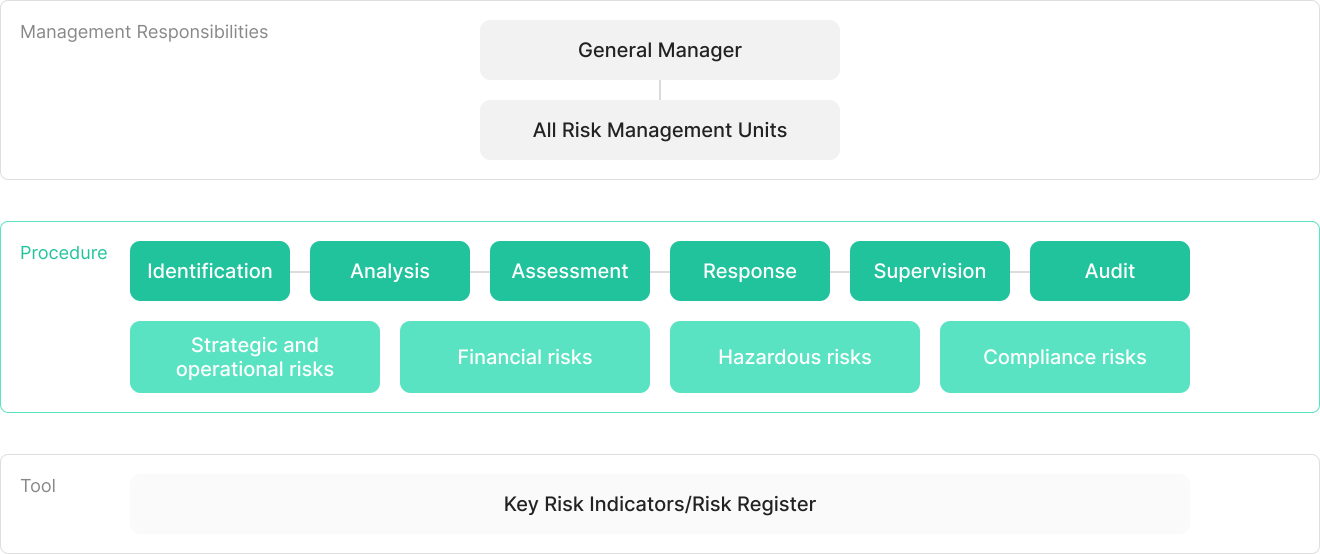
L&K recognizes that risk management is the cornerstone of stable operations and sustainable development.To ensure the company maintains strong resilience and responsiveness amid rapidly changing internal and external environments, L&K is committed to cultivating a comprehensive and institutionalized risk management culture. In alignment with the company’s overall operational strategy and long-term development goals, a multi-layered mechanism has been designed to identify, assess, control, and respond to risks.
Business Continuity Management (BCM)
To build a resilient operational foundation and ensure corporate sustainability, L&K Engineering is committed to providing uninterrupted services to strategic customers and stakeholders. We utilize the Business Continuity Plan (BCP) Procedure as a key risk management tool, deploying emergency response plans to prevent and mitigate crisis impacts, and maintain optimal business continuity.
Policy
- Deliver exceptional and uninterrupted services to our clients.
- Implement the BCM system and integrate resources to ensure ongoing effectiveness.
- Enhance resilience before, during, and after disruptions to protect the interests of clients and stakeholders.
Objectives
- Prioritize the protection of human life and safety above all.
- Build disaster prevention and response capabilities to minimize impact and accelerate recovery.
- Execute regular drills to verify BCP effectiveness and pursue continuous improvement.
Carbon Pricing Policy
Based on operational control, the Company has completed office greenhouse gas inventories, with Scope 1+2 emissions totaling approximately 500 tons CO₂e. The Company has not yet introduced an internal carbon pricing mechanism; at this stage, priorities are emissions inventory, reduction potential assessment, and management system establishment to progressively strengthen carbon management capabilities.
The Company continues to monitor domestic and international carbon pricing developments, incorporating carbon pricing plans into sustainability governance and climate risk assessments. In the future, it will prudently evaluate the introduction of suitable carbon pricing methods based on regulatory requirements, industry characteristics, and operational maturity to support low-carbon transformation and long-term operational resilience.